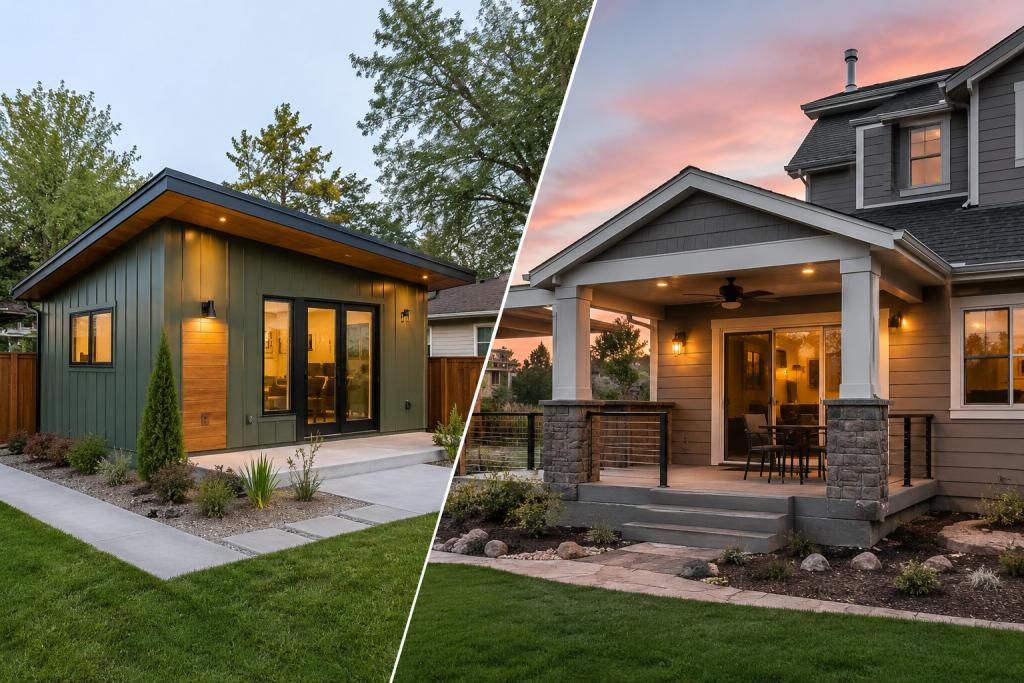
If you need more space in your home, you have two main options: build an accessory dwelling unit (ADU) or complete a home addition.
Both can add square footage, increase property value, and improve how your home functions—but they serve different purposes.
Understanding the difference between an ADU and a home addition is the first step in choosing the right investment for your property.
If you’re exploring your options, you can also review our ADUs & Home Additions overview
or dive deeper into Accessory Dwelling Units and Home Additions.
→ The right choice depends on your goals, property layout, zoning, and how you plan to use the space.
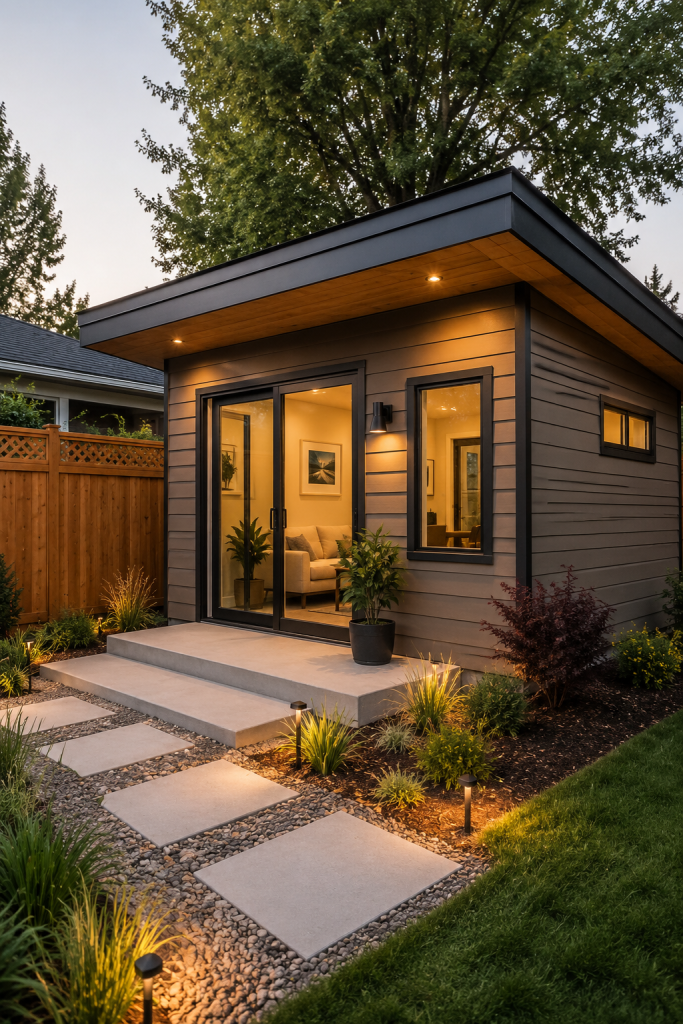
An Accessory Dwelling Unit (ADU) is a secondary living space on your property. It can be:
ADUs are commonly used for:
According to AARP’s ADU housing overview, ADUs are becoming more popular as homeowners look for flexible living solutions and aging-in-place options.
A home addition expands your existing home and becomes part of your primary living space.
Common types of additions include:
Unlike ADUs, additions are integrated into your home’s structure and typically share systems like HVAC, plumbing, and electrical.
ADUs often have stricter zoning requirements depending on the property.
You can review local guidelines through the Pikes Peak Regional Building Department permit resources.
Costs vary significantly depending on:
In general:
Both options are influenced by:
Planning and design play a major role in controlling costs and avoiding delays.
Learn how we approach that on our Remodeling Process page.
When deciding between an ADU and a home addition, it’s important to consider:
Colorado homeowners are increasingly exploring ADUs due to housing flexibility and long-term planning trends supported by state-level housing initiatives. You can explore broader housing context through the Colorado Department of Local Affairs.
It depends on your goals.
Both can increase property value, but the right choice depends on how you plan to use the space over time.
An ADU is a separate living unit, while an addition expands your existing home.
It depends on zoning and property specifics. Check local requirements through Pikes Peak Regional Building Department.
It depends on the scope, design, and infrastructure needs. Each project is unique.
In many cases, yes—but local regulations vary and should be reviewed before planning.
Yes, most ADU and home addition projects require permits depending on scope.
Choosing between an ADU and a home addition starts with understanding your goals and your property.
→ Explore your options with our ADUs & Home Additions page
→ Learn more about Accessory Dwelling Units
→ Or review Home Additions
If you’re ready to start planning,
→ contact J&B Remodeling to schedule a consultation.
